Antica Namur 2026: A Quiet Edition
Antica Namur Fine Art Fair, 49th edition. Namur Expo, 6–15 November 2026.
Guilloche was invited to the vernissage of Antica Namur's 49th edition. In this report, Ben Nijs shares his observations from the fair.
Written by Ben Nijs. Edited by Lawrence Murray.
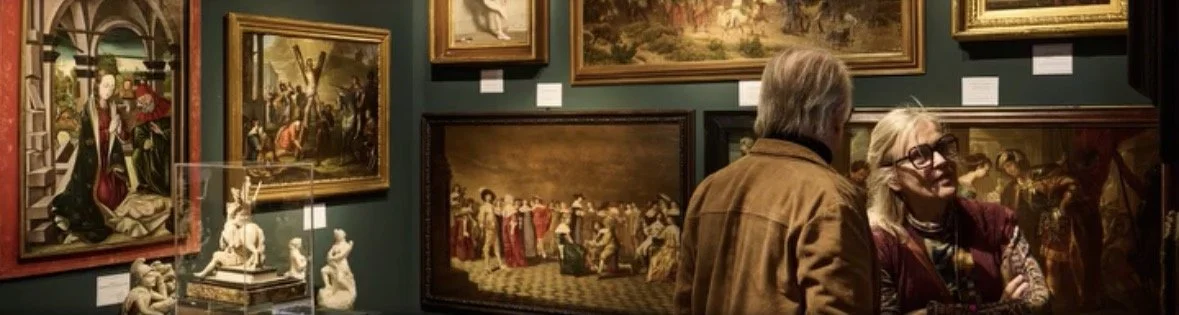
Since its establishment in 1977, Antica Namur has opened its doors every November, maintaining a position within the Belgian art-fair landscape that has become increasingly uncommon. While several established fairs have gradually shifted their focus towards modern and contemporary art, Antica has remained committed to the antique trade. Its 49th edition brings together approximately 110 Belgian and international galleries at Namur Expo, presenting a broad selection of Old Master paintings, sculpture, nineteenth-century art, furniture and objets d'art.
The fair's own selection of highlights illustrates this breadth, ranging from Joseph Willems's 1884 bronze Pedrolino and an Erté gouache from around 1928 to an Italian Head of Medusa tondo and a Meissen porcelain group from the 1740s.
The market
Sales during the opening days were modest, with activity appearing to slow as the week progressed. Several dealers left the vernissage anticipating that the second weekend might bring renewed interest. This reflects a broader, increasingly selective market rather than a condition unique to Namur.
Such circumstances inevitably change what a stand is expected to do. In a buoyant market, the object can often speak for itself. In a more hesitant one, presentation, scholarship and the dealer's own conviction become considerably more important. The galleries that approached the vernissage as an occasion in its own right distinguished themselves. Others were less successful in making their presentations compelling.
The overall standard remained consistent, although genuinely exceptional works were relatively few. It was a fair that rewarded looking carefully rather than expecting to be immediately impressed.
Highlights
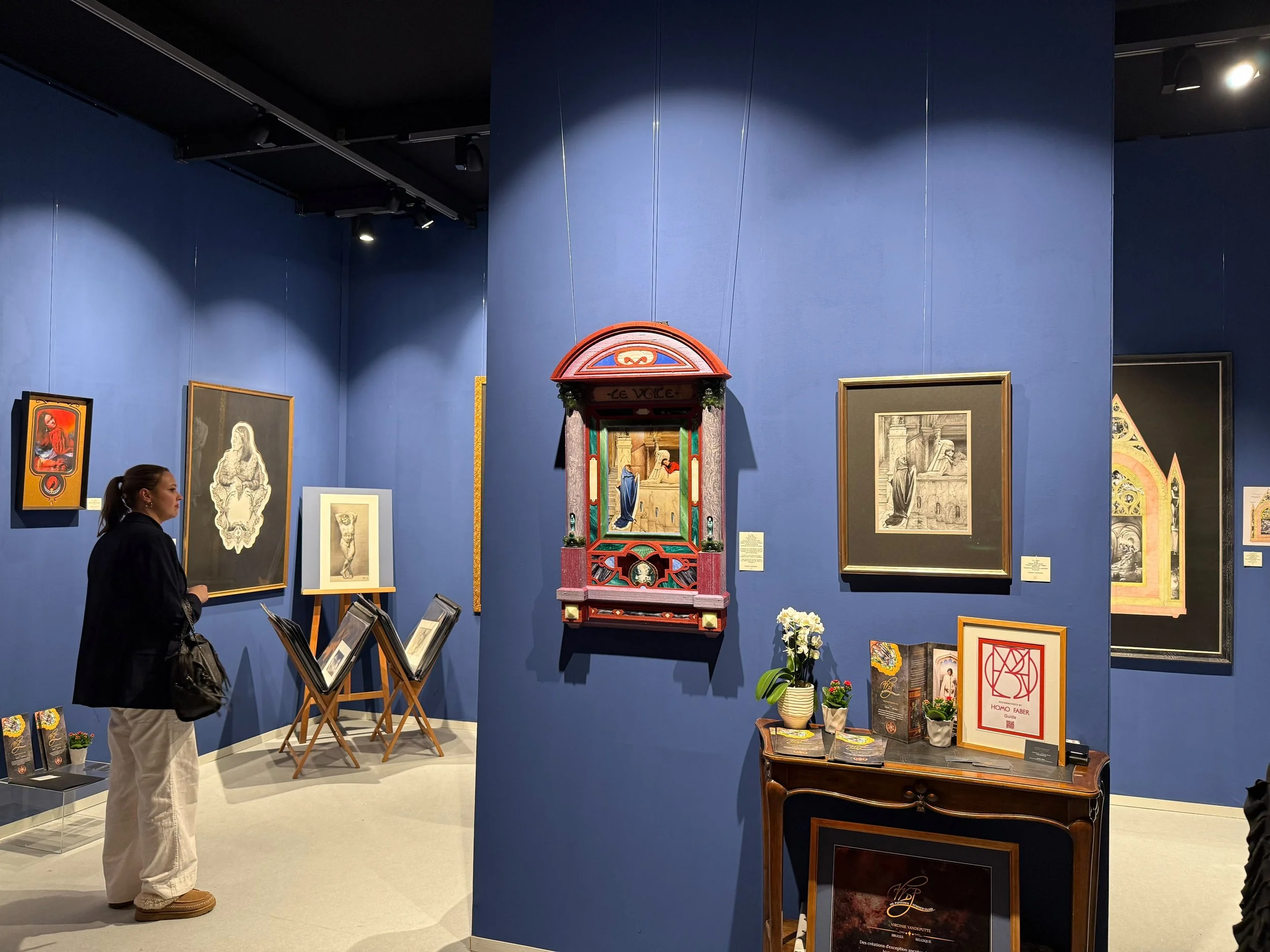
Virginie Vande Putte
The most compelling presentation of the fair came from Virginie Vande Putte. Her participation in Homo Faber in Venice earlier this year appears to have marked an important development in her practice. Rather than concentrating on finished objects, she presented primarily design drawings for projects that she is now developing in collaboration with specialist artisans, while seeking investors to bring them to fruition.
The stand functioned less as a conventional gallery presentation than as an invitation into an ongoing creative process. Visitors were not simply being asked to acquire an object, but to consider participating in its creation. In a market characterised by caution, this approach offered an interesting alternative to the traditional relationship between artist, dealer and collector.
Cornelis Floris II de Vriendt
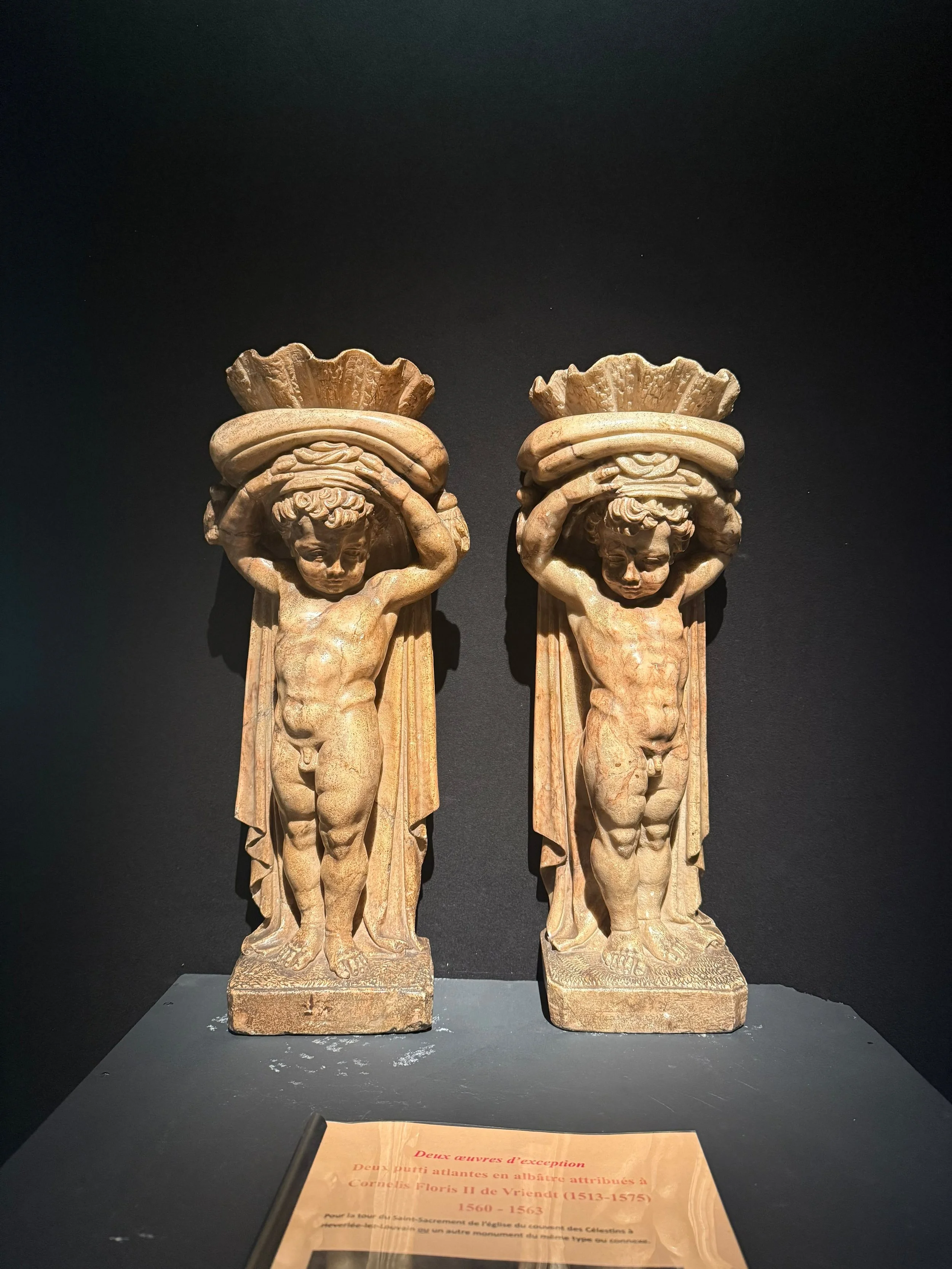
Among the most historically significant objects at the fair were a group of alabaster putti attributed to Cornelis Floris II de Vriendt, the sixteenth-century Antwerp sculptor and architect closely associated with the city's Town Hall.
The figures originate from the sacrament tower of the Celestine monastery in Heverlee, executed around 1560–1563 and subsequently dispersed towards the end of the eighteenth century. M Leuven preserves two figures from the same monument: one has been in the collection since 1853, while the other was acquired at TEFAF Maastricht in 2017.
The reappearance of individual elements from a dispersed monument offers more than an opportunity to acquire an important Renaissance sculpture. Each surviving figure contributes to the gradual reconstruction of an artistic ensemble whose original context has largely been lost. It is precisely this possibility that makes specialised art fairs valuable to museums and collectors alike. For those interested in sixteenth-century Southern Netherlandish sculpture, opportunities of this kind are uncommon.
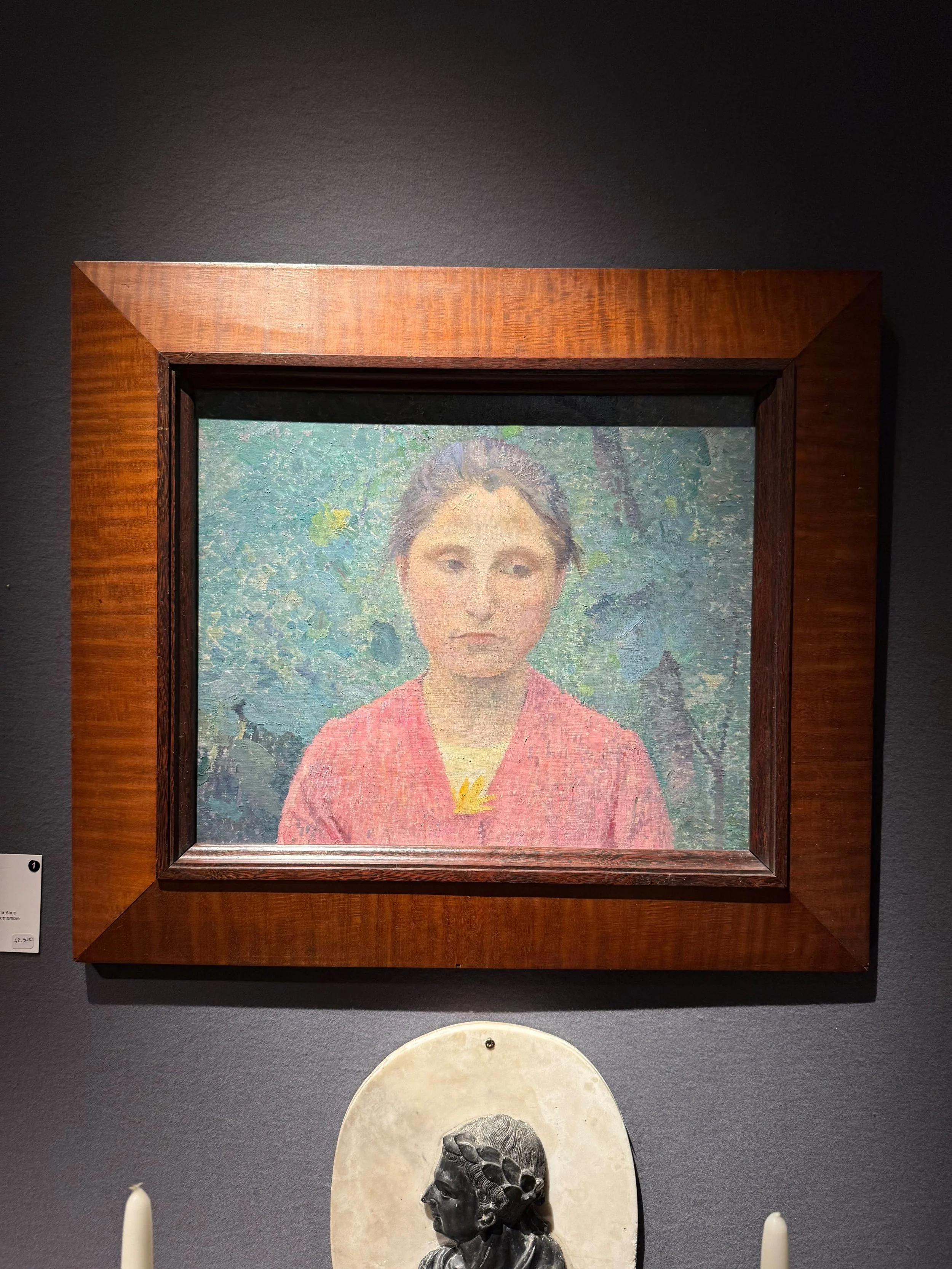
Henri Martin
Among the paintings, a particularly accomplished work by Henri Martin stood out. Born in Toulouse in 1860, Martin emerged from the Symbolist generation and developed a distinctive pictorial language characterised by luminous colour and divided, almost mosaic-like brushwork. His paintings occupy an interesting position between Symbolism and the decorative tendencies of the late nineteenth and early twentieth centuries.
This was one of the paintings that justified a visit to the fair in its own right.
A marble and its plaster
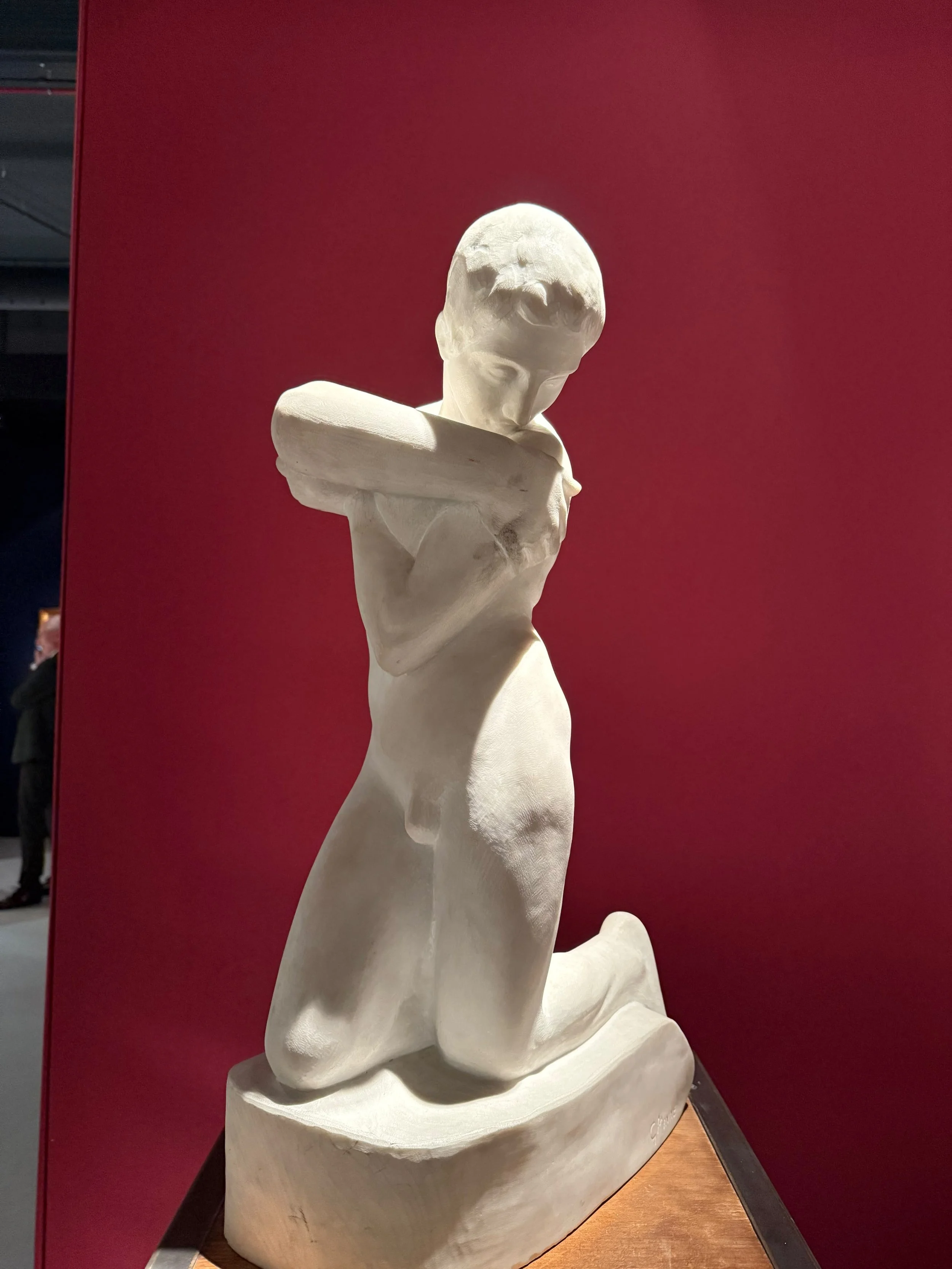
One of the notable sales during the opening days was a marble by George Minne, the Ghent sculptor best known for his Kneeling Youth, presented together with a related plaster model.
Pairings of this kind are uncommon and can carry considerable art-historical significance. Their value, however, depends on the relationship between the two objects: whether the plaster served as a preparatory model, a subsequent version or a reference for the execution of the marble. Their respective dates, production histories and provenances are equally important.
It is a useful reminder that the significance of an artwork does not reside exclusively in the object itself. The documentation accompanying it, and the expertise of the dealer presenting it, are integral to understanding what is being offered. For collectors considering works of this nature, the supporting documentation deserves as much attention as the sculpture.
A change in taste
One shift in the selection of artists across the fair was particularly noticeable. Modest Huys, a familiar presence in previous editions, was absent this year. Fernand Khnopff, by contrast, appeared across the stands of several galleries.
The contrast between Flemish Luminism and Khnopff's Symbolism is interesting, not least because it may point towards changing patterns of demand. Khnopff enjoys a stronger international profile and occupies an established position within the broader narrative of European Symbolism. His repeated presence may therefore reflect dealers' preference for artists whose reputations extend beyond the regional market.
Yet representation alone says little about quality. When a single artist appears so frequently across a fair, the more pertinent question becomes how many of the works on offer are genuinely significant.
Conclusion
Antica Namur remains a fair that rewards a slow and attentive visit. Its 49th edition was quieter than its long history might suggest, with a cautious market and relatively few exceptional works. Nevertheless, several presentations demonstrated the value of maintaining a specialised platform for historical art.
Virginie Vande Putte's drawings offered a compelling perspective on the relationship between artistic practice and patronage, while the alabaster putti attributed to Cornelis Floris II de Vriendt illustrated the importance of fairs as places where dispersed artistic heritage can resurface.
Next year will mark Antica Namur's fiftieth edition. It is a significant milestone, and an opportunity for the fair to demonstrate what distinguishes it within an increasingly competitive art-fair landscape.
Antica Namur runs until Sunday 15 November 2026 at Namur Expo.