February 2026 | Doha, Qatar
Art Basel Qatar 2026 - A Construction of Cultural Capital in an Emerging Market
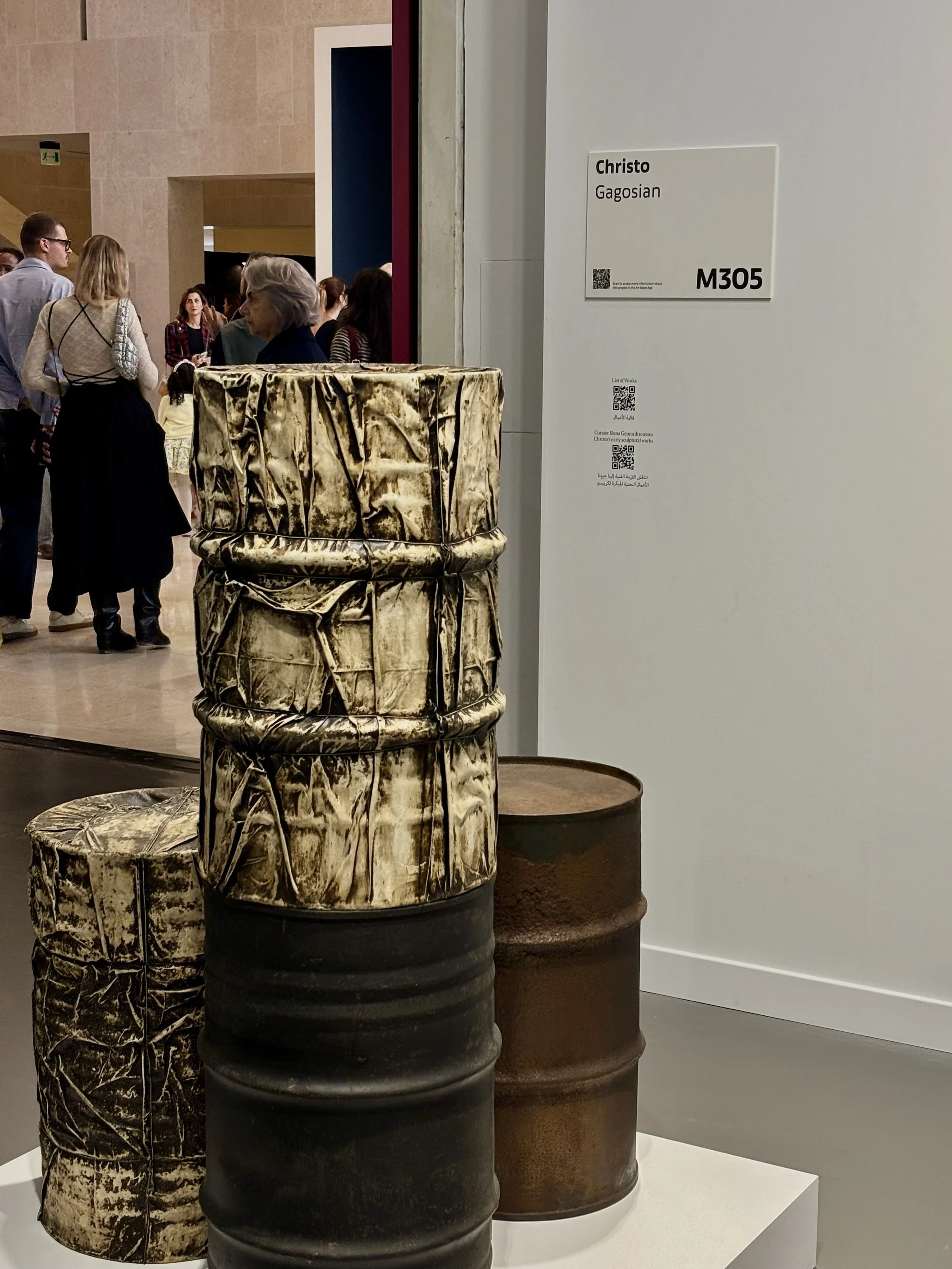
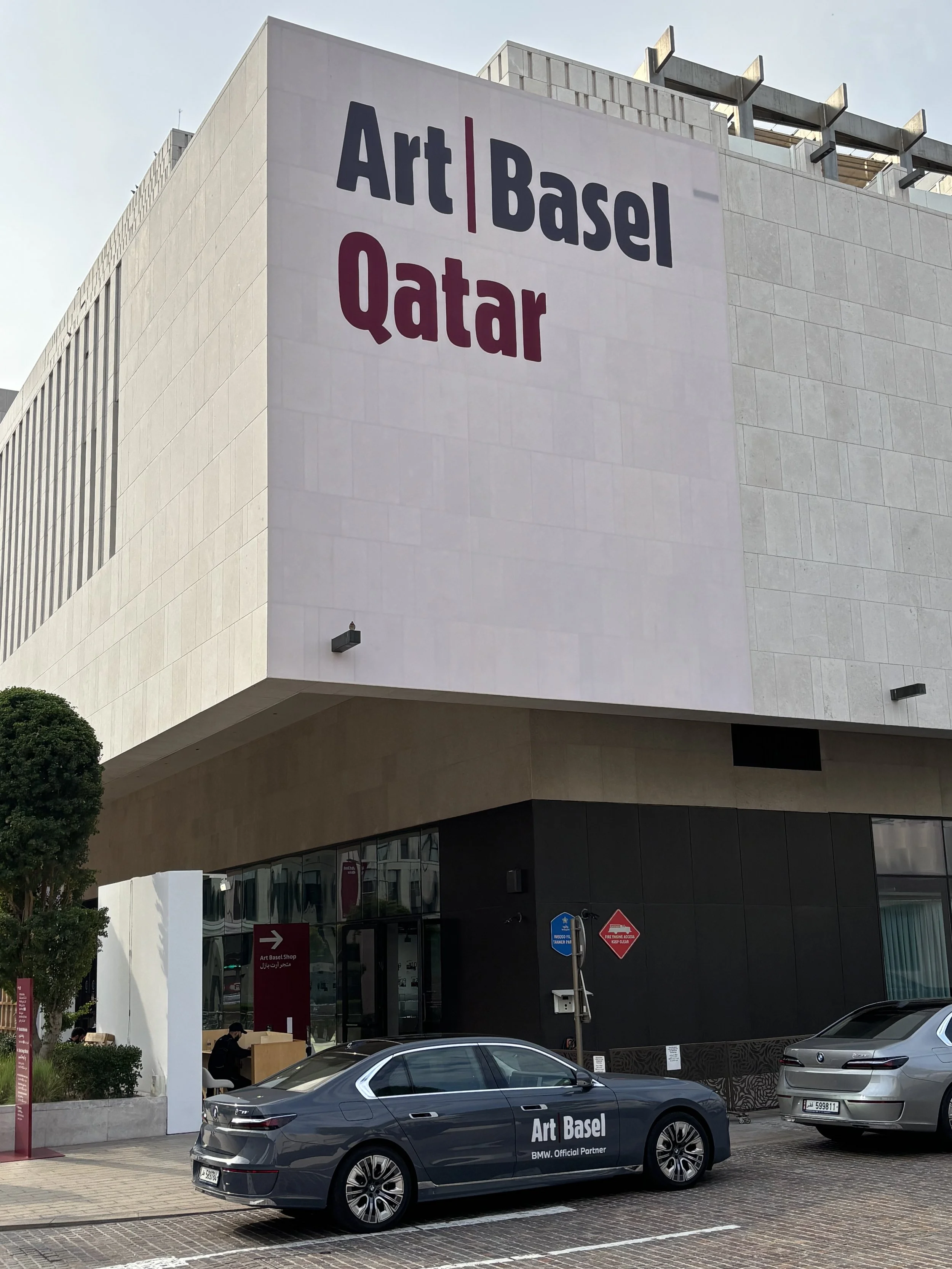
Guilloche Group attended the inaugural edition of Art Basel Qatar in Doha (February 5–7, 2026, with preview days on February 3–4), where the fair's performative function was immediately legible. It operated less as an autonomous marketplace than as a cultural and geopolitical instrument: an event staged as much to be seen as to sell. With 87 galleries from 31 countries and territories presenting 84 solo artist projects under the theme Becoming (curated by Egyptian artist Wael Shawky and Vincenzo de Bellis, Chief Artistic Officer and Global Director of Art Basel Fairs), the fair positioned itself as a deliberate departure from the overtly transactional dynamics of other Art Basel editions. The open layout across M7, a creative hub in the heart of Doha, and the Doha Design District, complemented by public interventions in Msheireb Downtown that included nine large-scale, site-specific sculptures, installations, and performances, reinforced the sense of a curated exhibition format rather than a commercial market.
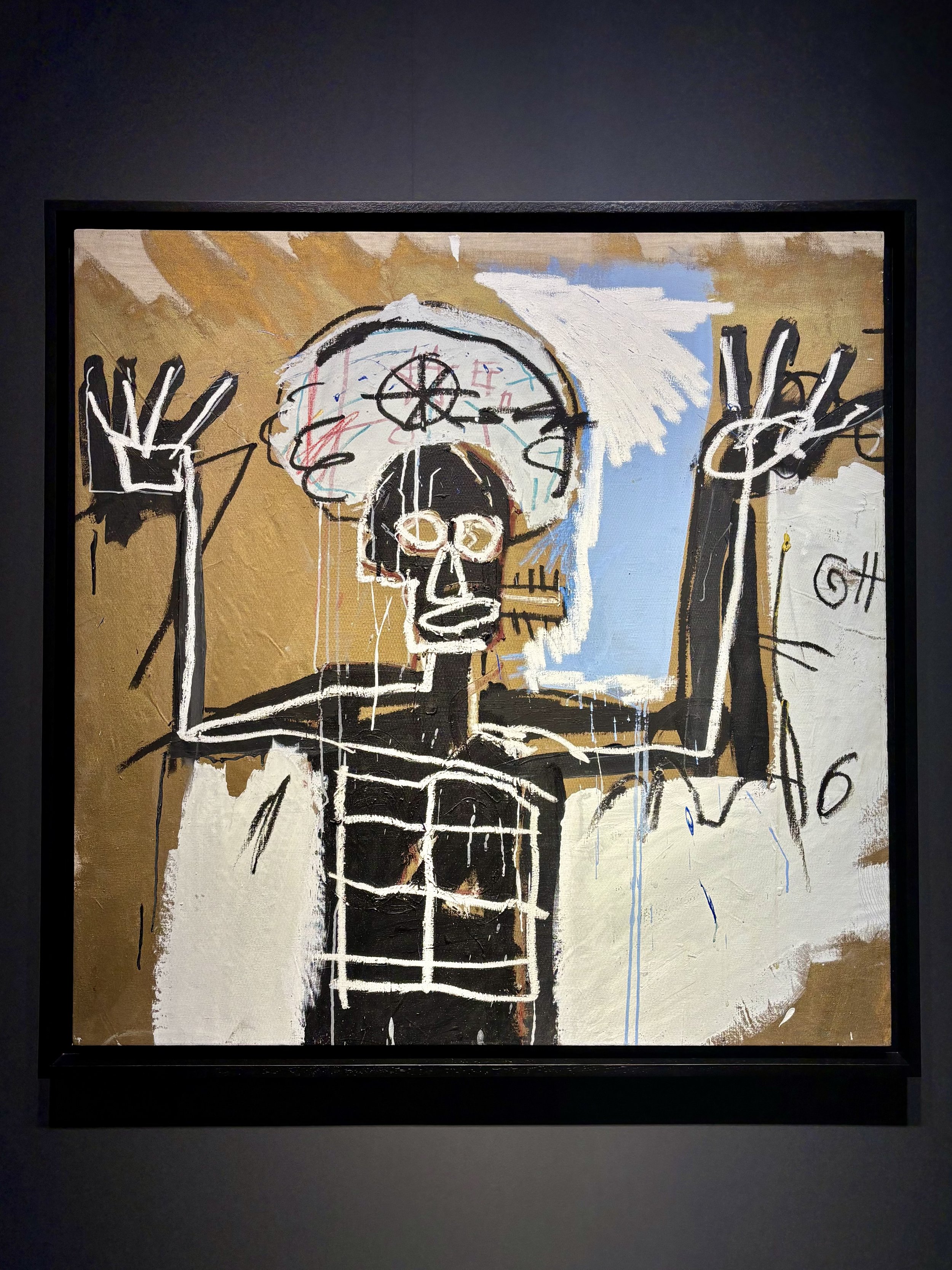
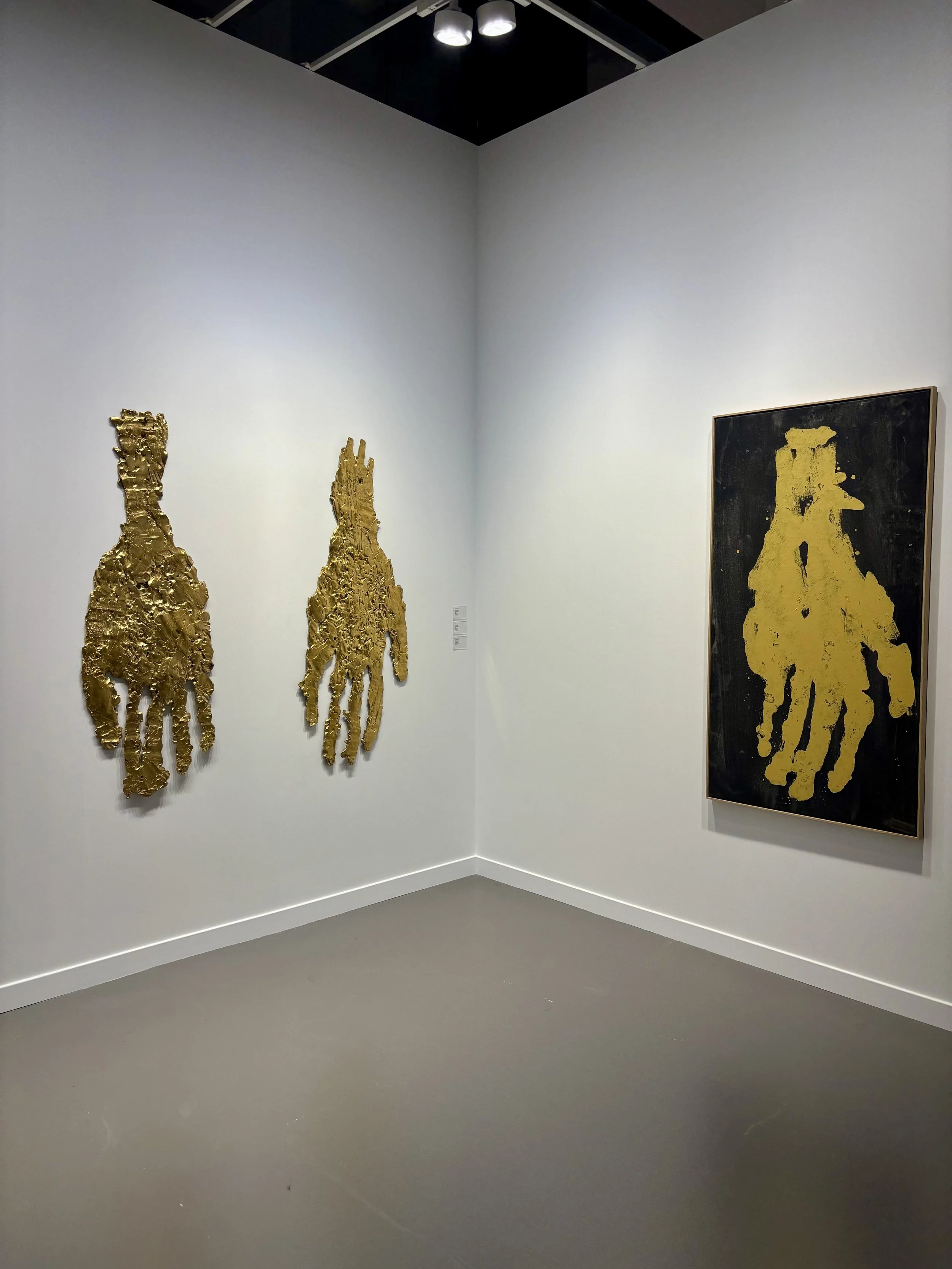
The prominent presence of postwar canonical names, including Pablo Picasso (Van de Weghe), Donald Judd (Mignoni), Georg Baselitz (White Cube), Jean-Michel Basquiat (Acquavella Galleries), and Marlene Dumas (David Zwirner), seemed oriented less toward immediate sales than toward the rapid accumulation of symbolic capital. These works functioned as infrastructural anchors: they granted the fair instant legibility within the global art circuit, securing legitimacy through the recognizable weight of the Western canon. In this context, the canon did not simply appear; it was strategically deployed. Notably, Baselitz's works led reported sales, underscoring the market's appetite for established figures even in this nascent setting.
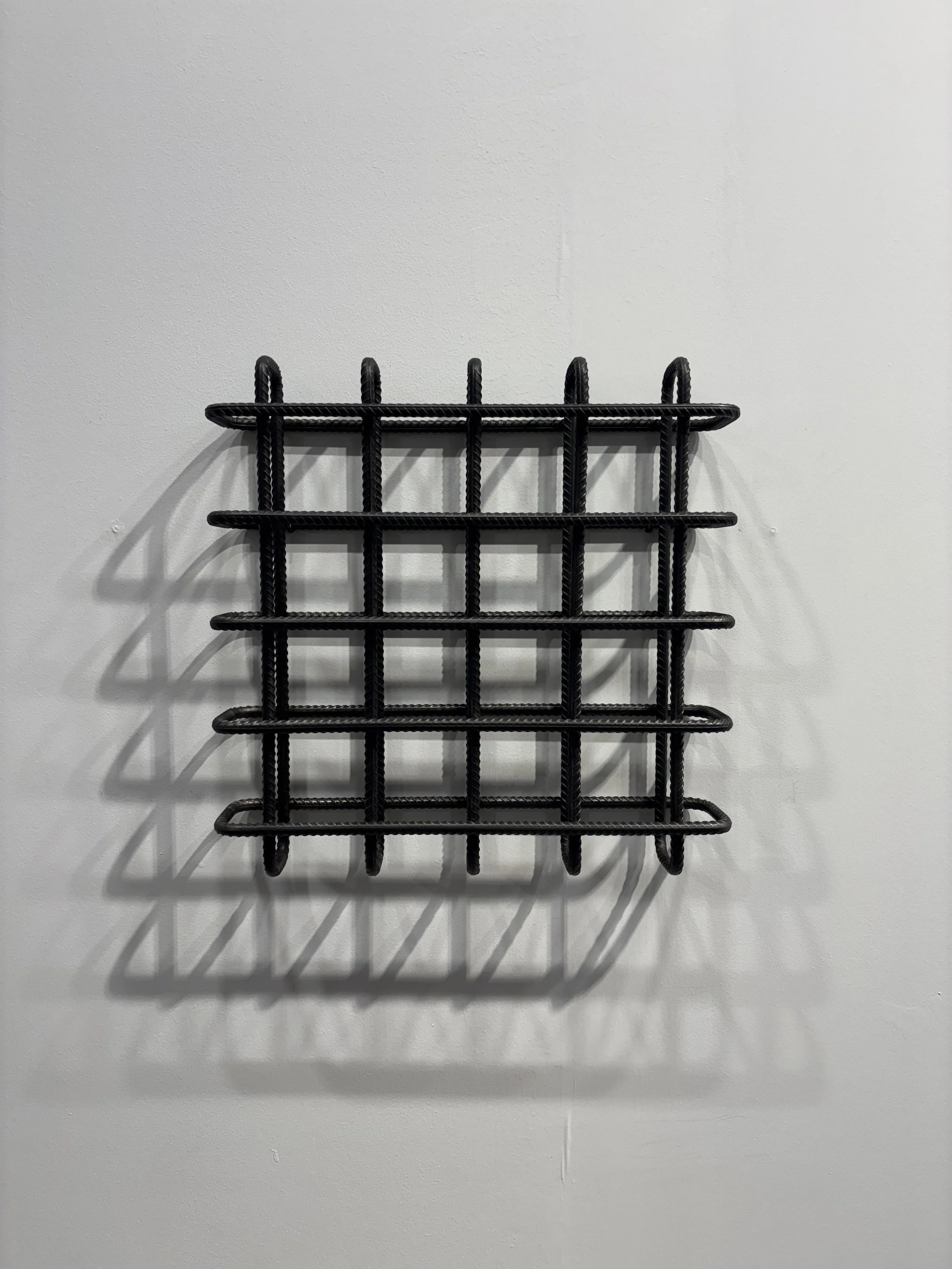
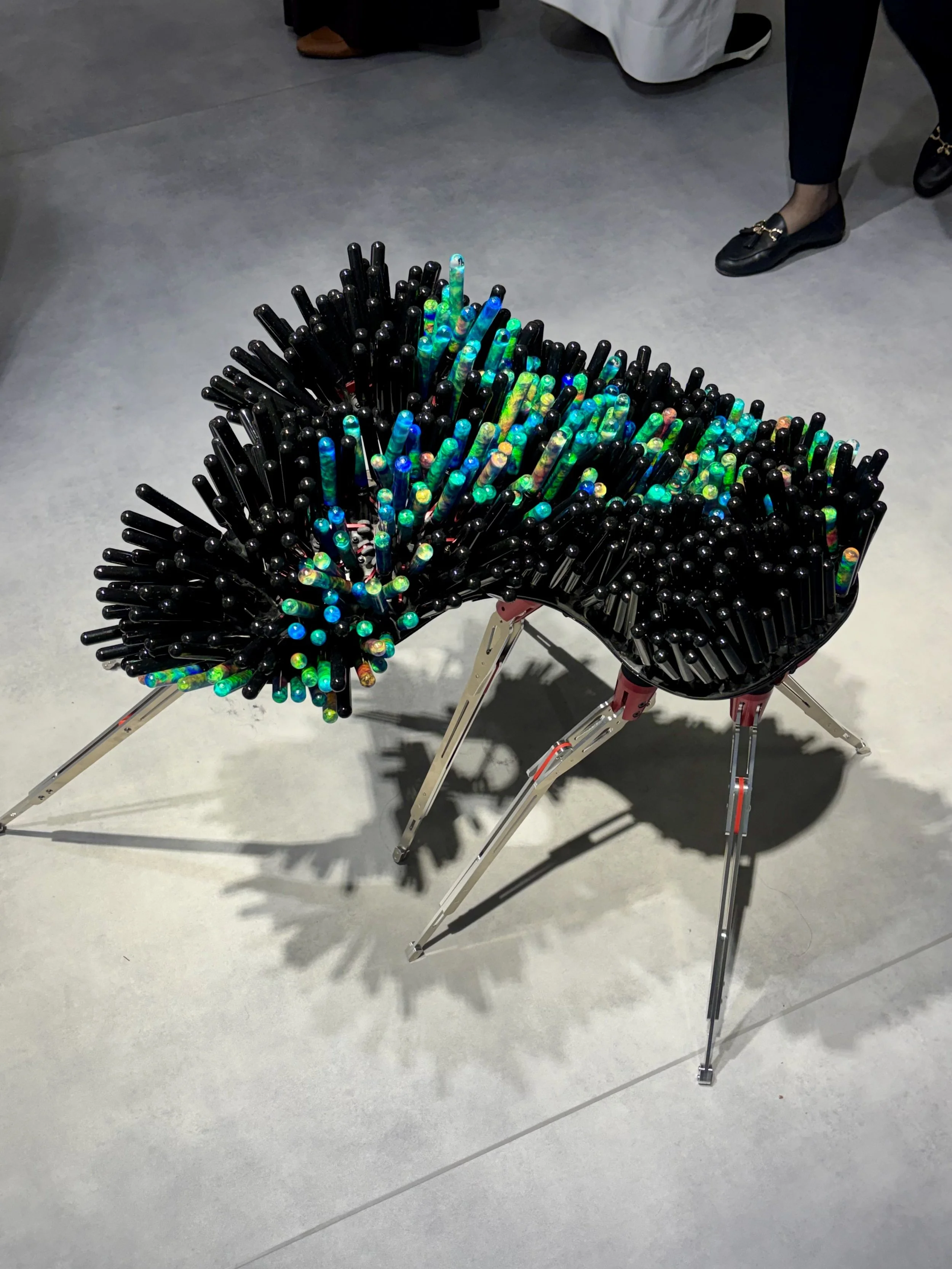
In contrast, the fair also staged a strong representation of artists from the region, particularly from Saudi Arabia, through galleries such as Athr, Hafez, and Sabrina Amrani, alongside first-time participants like Dubai's The Third Line and 15 other newcomers. Yet much of this work, both aesthetically and discursively, aligned closely with already naturalized Western art historical formats. Mona Hatoum's presentation by Galerie Chantal Crousel, comprising nine works including new 2025 pieces that explore grids, cages, and constraint, read as a particularly clear instance of this phenomenon: a regional position rendered instantly legible through a vocabulary long familiar to European and North American institutions. Similarly, the optical, lenticular kineticism of Mustapha Azeroual (Loft Art Gallery, Morocco) operated as a form of translation, with local production made "readable" within an existing international grammar of contemporary art. The resulting tension is productive but unmistakable, raising questions about the line between representation and adaptation to the conditions of global circulation. More than half of the featured artists hailed from the Middle East, North Africa, and South Asia (MENASA), amplifying this dialogue and signaling the fair's intent to foreground underrepresented voices.
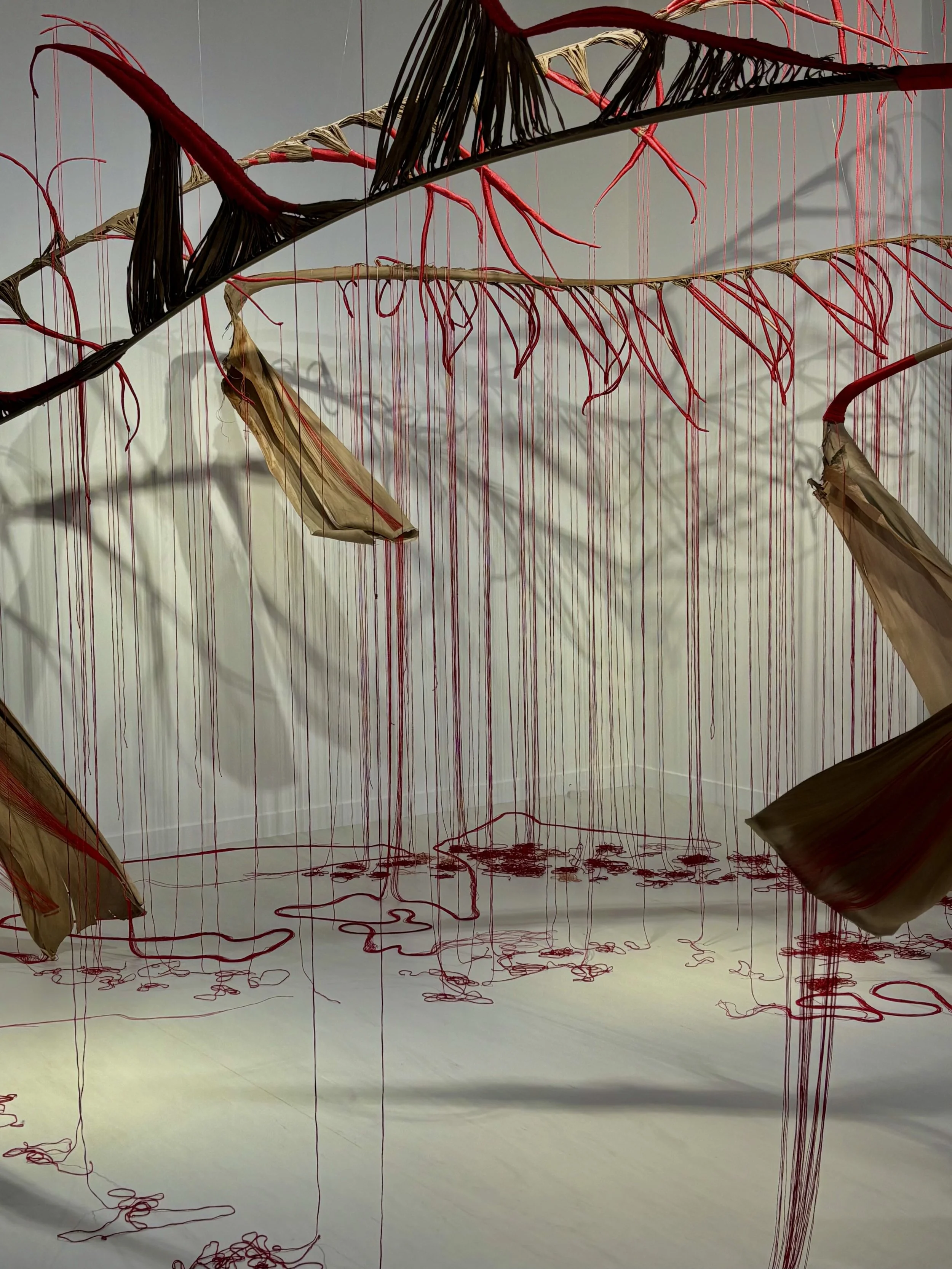
The dominance of figuration and traditional media, especially weaving and craft-based practices (notably El Anatsui at October Gallery and Olga de Amaral at Lisson Gallery), can be read as a form of aesthetic risk reduction. In a market still in formation, the tactile, the familiar, and the iconographically legible appear to circulate more smoothly than conceptually or institutionally demanding positions. This preference suggests a market seeking stabilization, relying on forms that offer immediate cultural readability. Standout works such as Lynda Benglis's multi-part sculpture Elephant Necklace Circle (2016) at Pace Gallery and Shirin Neshat at Lia Rumma further exemplified this blend, drawing on global influences while resonating locally.
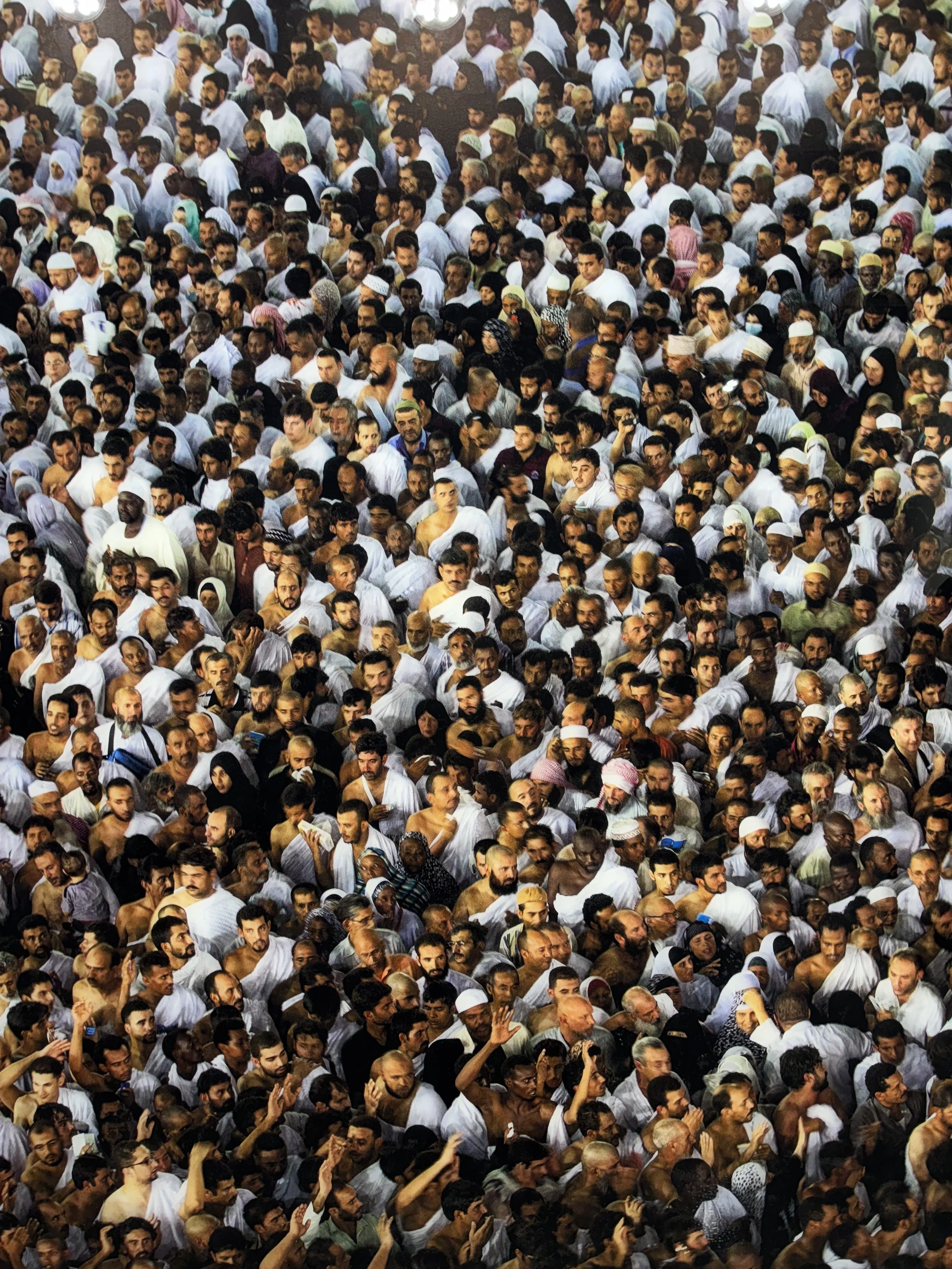
A photographic diptych by Ahmed Mater emerged as one of the fair's most significant moments. Photography, historically less burdened by canonical hierarchies than painting or sculpture, operated here as a mediating medium, capable of articulating local-political meaning without being immediately absorbed into heavy modernist or postmodernist referential frameworks. Mater's Temporal Migration series (presented by Athr Gallery), including the diptych Black Stone (2025), juxtaposed the dense choreography of pilgrimage to the Kaaba with empty landscapes of power and migration. The work offered a layered meditation on Mecca's transformation, and its sale for over €50,000 underscored the market viability of this kind of aesthetic positioning. Overall sales reflected mid-market strength and institutional acquisitions, with measured momentum rather than frenzied buying, in keeping with the fair's boutique scale.
The audience appeared predominantly Western-oriented (though this may have been shaped by the timing of visits), while discussions with gallerists revealed an ambivalent stance. Enthusiasm for entry into a new market was tempered by a palpable awareness of the orchestrated conditions under which this market is unfolding, including the navigation of influential patronage networks tied to prominent collections and institutional oversight in the region. Celebrity sightings, including David Beckham at the Art Basel Café, Princess Eugenie of York, and figures such as Rema and Naomi Campbell, added a layer of glamour and international buzz, drawing broader attention to Doha's emerging status as an arts hub. Art Basel Qatar thus manifested not merely as an art fair but as an experimental field in which cultural legitimacy, geopolitical ambition, and market formation were staged simultaneously. With over 17,000 visitors (more than half from the MENASA region), substantial state support (including booth subsidies reportedly around $15,000 to $25,000, alongside support for artist travel and logistics), and the guiding presence of collections such as those of the Al Thani family, whose curatorial imprimatur has long shaped Qatar's ascent as a global arts hub, the fair marked a meticulously engineered beginning to a new cultural ecosystem. High-profile endorsements, such as visits from Her Highness Sheikha Moza bint Nasser and Minister Mariam bint Ali Al Misnad, further emphasized its role in fostering cultural diplomacy and international cooperation.
Overall, Guilloche Group views Art Basel Qatar as a strategic intervention: less a fully matured market at present than an investment in future circulation. Its long-term success will depend on whether regional voices can continue to assert themselves without being compelled to translate entirely into Western grammars, and whether the fair can evolve from staging legitimacy to generating it, perhaps through the sustained validation of key patrons who bridge institutional ambition and artistic potential. Early reactions highlight its success in creating focused, intimate encounters, setting a resilient model that prioritizes quality over excess amid a shifting global art landscape.