White Room
Christopher Colm Morrin at Gallery Sofie Van de Velde, Antwerp
Written by Ben Nijs, edited by Lawrence Murray. 9 May 2026
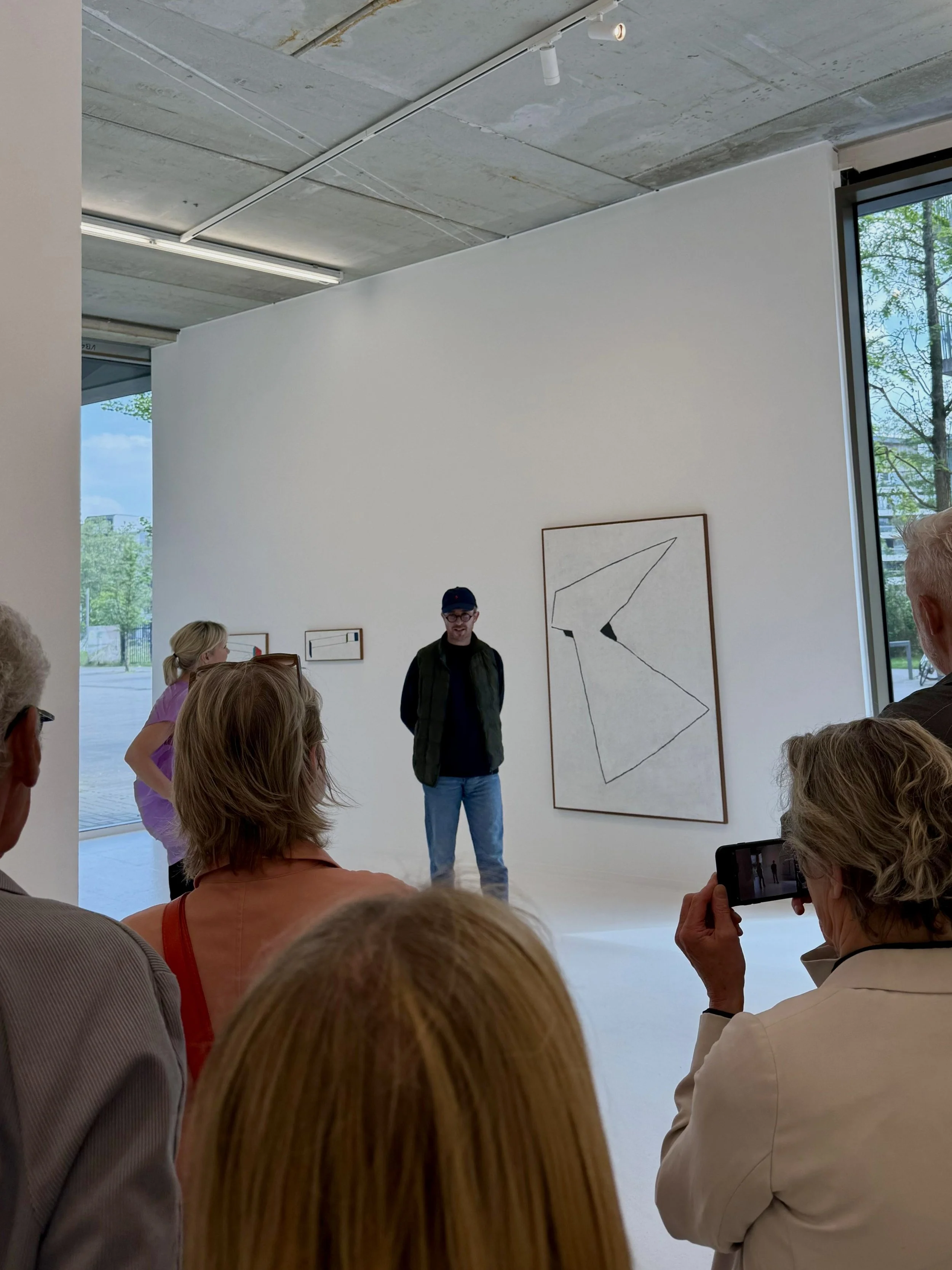
The invitation said “private guided tour.” What it turned out to be was something less rehearsed and more valuable: an artist standing in front of his own work, speaking without notes, thinking aloud. Today was the last day of his exhibition.
Christopher Colm Morrin, Dublin-born and Berlin-based, trained initially in psychology and philosophy before completing a major in psychoanalytic psychotherapy, carried none of the stylised self-consciousness contemporary art often rewards. As our correspondent Ben Nijs observed, he seemed genuinely approachable and entirely at ease within the space. When he spoke about the work it was without the armour of prepared critical language. The explanations arrived slowly, like the paintings themselves, not from the outside in but from somewhere interior.
White Room takes its name partly from the gallery context, the white cube as the standard, near-universal frame for contemporary art, and partly from Morrin’s own biography. His father is a professional theatre actor, and the title carries the inheritance of that world: the stage, the script, the moment when a performer finds themselves standing in blinding blankness. That layering, between the white walls of a gallery and the psychological experience of exposure on a stage, is not incidental to the work. It is the work.
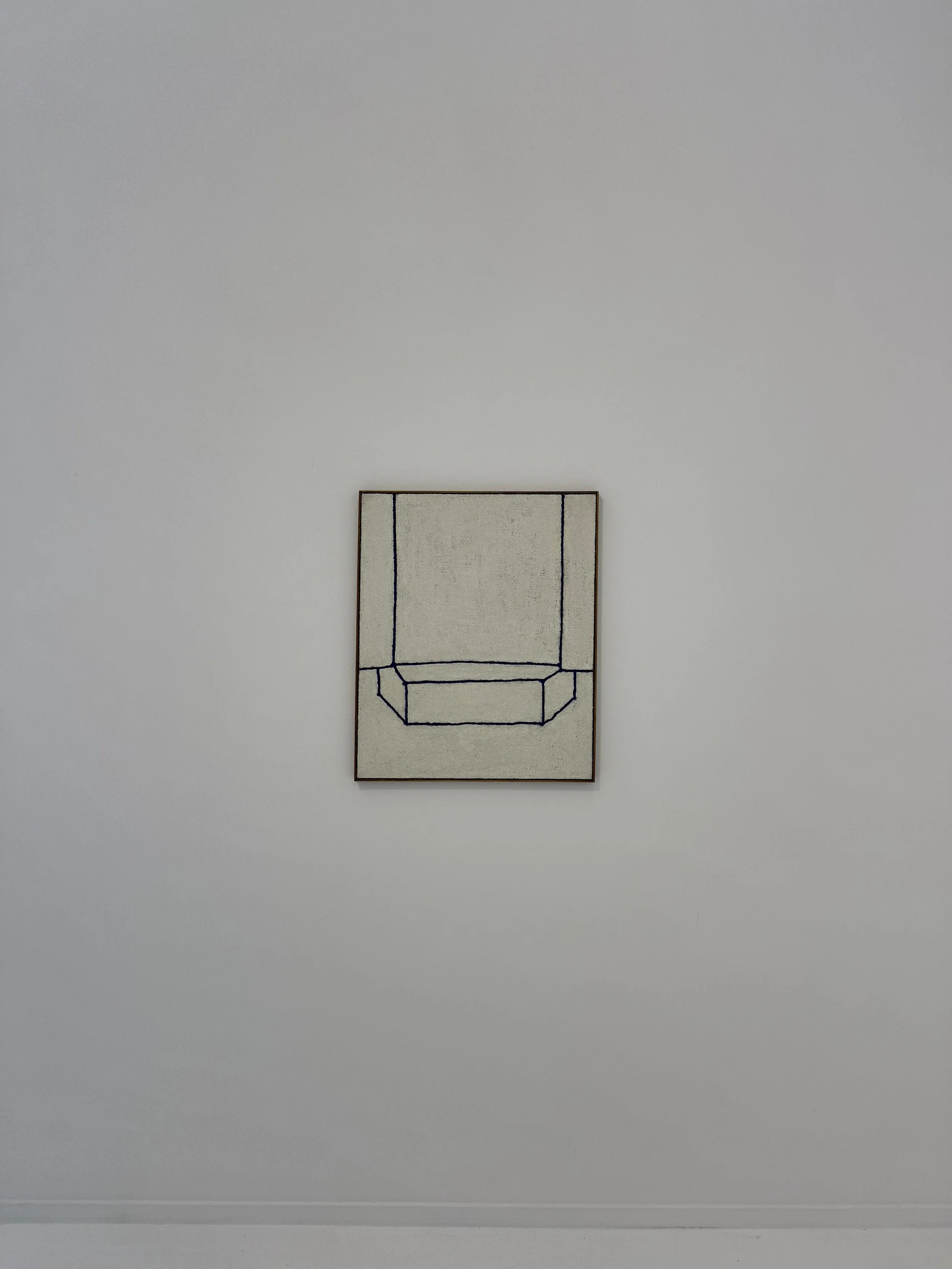
The most immediately striking pieces are the most figurative: a painting of a stage, with its heavy curtained wings, two panels of draped fabric on either side. Those curtain panels read almost as doors, thresholds between interior and exterior feeling, fabric that could fall and close the stage at any moment. The suggestion of imminent concealment is what makes the image live. The stage not as a place of performance but as a place of exposure, of standing somewhere before the wings come in.
He is, by his own stated intention, a deliberately small-scale artist. With one exception, a large canvas built around a form he described as an obsession, though he offered no explanation of the obsession’s source, the works are intimate, modest in their physical ambitions. This is not diffidence. It is a considered position: a refusal to be pompous, to occupy space one hasn’t earned through feeling. When someone in the room asked whether the work was metaphysical, he agreed without hesitation that all art is, in some way, metaphysical. He said it without ceremony.
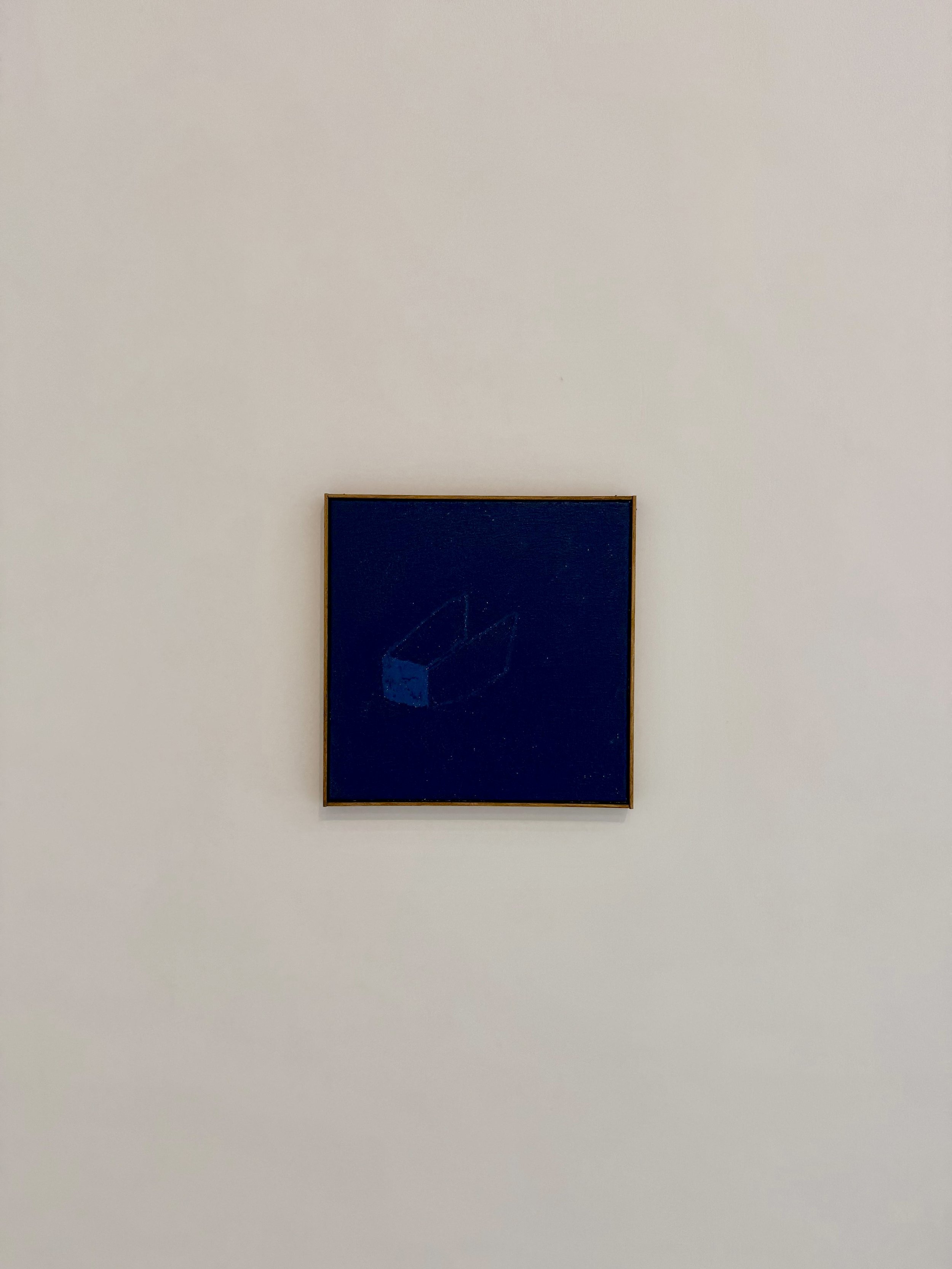
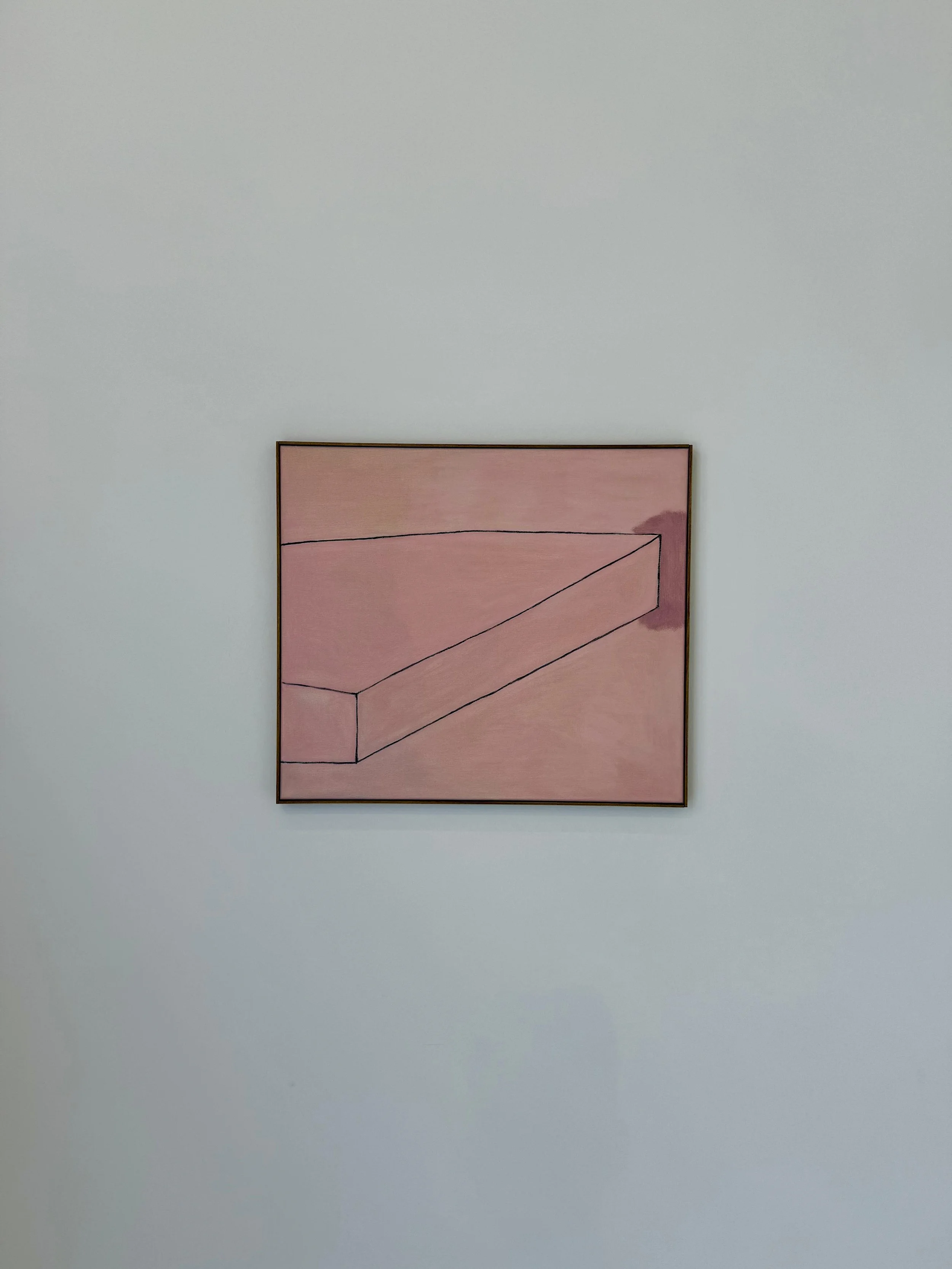
The gallery itself was genuinely beautiful, flooded with light, actual light rather than the artificial temperature-controlled kind, falling into the room and changing it. Against that whiteness, Morrin’s paintings, with their elemental shapes, raw saturated colour and compressed interior space, held differently than they might elsewhere.
The larger abstract works are harder to enter quickly. Morrin acknowledged as much without apology. A period of serious illness and extended confinement preceded this body of work, and it is present not as subject matter but as register, the particular quality of attention that arrives when ordinary life contracts and what remains is purely interior. The introspection is structural, not decorative.
What stays with you after a visit like this is not a specific painting but a feeling about how an artist occupies their own work. Morrin is someone for whom making is a form of thinking, psychology, philosophy and paint as continuous rather than separate disciplines, and who has the confidence to stand in a white room and not perform authority he doesn’t feel. That is quietly rare.